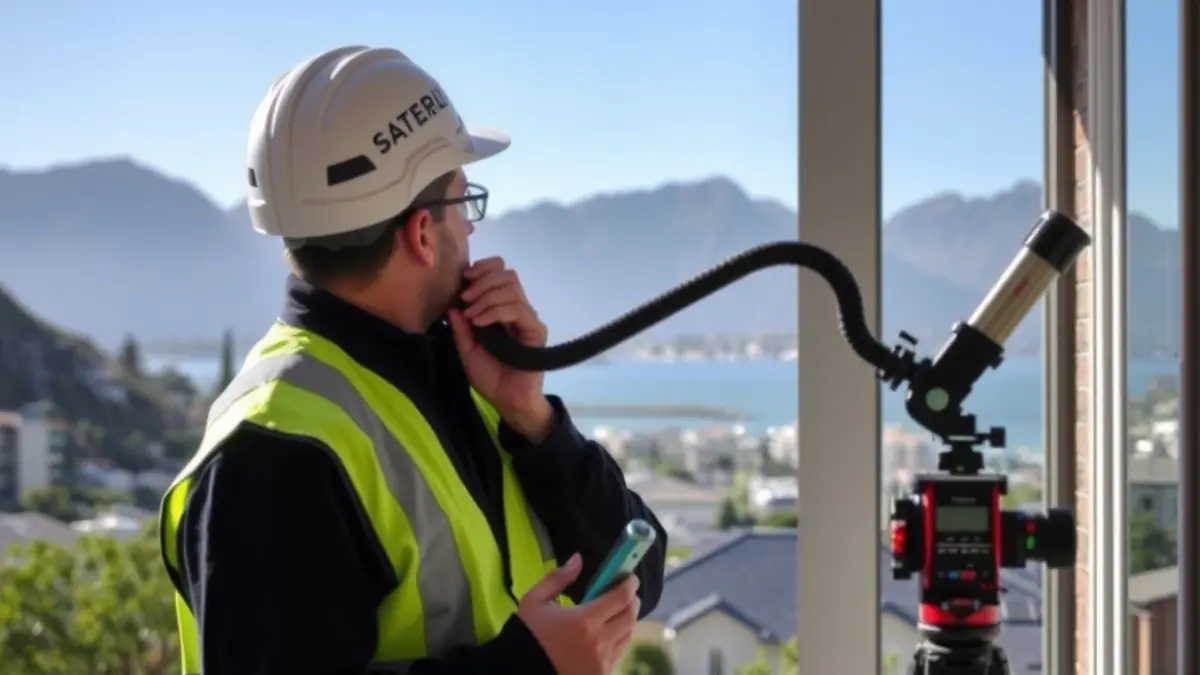
The cost of a DStv installation in Fish Hoek depends on more than the decoder on the shelf. Cable length, roof access, wall construction, the number of viewing rooms and the condition of an existing dish can all change the work required. Homes near False Bay also need sensible choices around brackets, connectors and cable routing because salt mist can shorten the life of exposed metalwork. A useful quote should therefore describe the job, not simply offer one unexplained total.
This guide explains the main cost factors so that Fish Hoek homeowners, landlords and small businesses can compare quotations on equal terms. It does not publish fixed prices because equipment availability and site conditions change. Instead, it shows what an installer should inspect and what should be included before work begins.
What is usually included in an installation quote?
A standard new DStv installation generally covers mounting and aligning a suitable dish, running approved coaxial cable, fitting connectors, connecting the decoder and confirming that the service is working. The exact scope matters. A quote for an easy single-storey wall mount cannot be compared directly with one that requires a long cable run, a chimney bracket or careful access to a steep roof.
Ask whether the proposed equipment is new, which parts are included, how many metres of cable are allowed and whether activation assistance is part of the visit. If a dish is already present, the installer should first decide whether it is serviceable. Reusing a stable dish and sound cable may reduce unnecessary work, while keeping rusted brackets or water-damaged connectors can create another call-out soon afterwards.
The biggest factors affecting cost
Dish position and safe access
Fish Hoek sits between mountain slopes and False Bay, so line of sight can vary from one street to the next. A clear mounting position may be easy to reach, or it may require extra brackets and more time. Trees, neighbouring buildings and parts of the mountain can restrict the available angle. Professional dish alignment should use signal readings rather than visual guesswork, especially where the acceptable mounting area is narrow.
Cable routes and older brick homes
Older brick houses can require more careful drilling and cable planning than newer open-plan properties. The shortest route is not always the neatest or best protected. Cable should avoid sharp bends, standing water and unprotected joins. Concealed routes, ceiling access and long distances between the dish and television point add labour and materials. A site visit is often the best way to avoid a quote that changes after work starts.
Decoder and viewing setup
A basic single-room decoder setup costs less to install than a recording or multi-room arrangement. An Explora installation may involve different signal distribution and network requirements. If two viewing environments are needed, XtraView installation requires compatible equipment, correct cabling and proper configuration. Tell the installer exactly what equipment you already own and which rooms must be connected.
Existing faults and weather damage
A low quote based on reusing everything is poor value if the old system is already unreliable. False Bay salt mist can corrode connectors and brackets, while strong south-easterly wind can expose movement in an insecure mount. If pictures break up, channels disappear or signal readings fluctuate, request proper DStv repairs rather than paying for random part replacement. Diagnosis should separate decoder, cable, connector, LNB and alignment problems.
Common extras that should be priced clearly
Moving a dish or decoder is a separate task from a first installation. A planned DStv relocation may involve removing equipment safely, assessing what can be reused and installing it at the new address. Within the same house, moving the television point can still require a new route and wall finishing.
Screen installation should also be itemised. Professional TV mounting includes checking the wall type, selecting suitable fasteners, setting a comfortable height and managing visible cables. A heavy screen mounted into old brick or above a fireplace needs a different approach from a small screen on a straightforward internal wall.
Free-to-air viewing may be useful as a separate source or backup, but it requires the right equipment. Ask for Openview installation if that platform suits the household, or TV aerial installation when terrestrial reception is part of the plan. These should not be assumed to work through an unsuitable existing cable without testing.
Budgeting for WiFi, cameras and a complete media plan
Modern television setups increasingly depend on the home network for streaming, software updates and connected devices. If coverage is weak in bedrooms or a study, include a home WiFi network assessment before buying repeaters at random. Thick brick walls and changes in floor level can create dead zones. A measured plan may recommend better router placement, wired access points or a mesh system, depending on the property.
Security can be planned at the same time because cable routes, power points and network capacity often overlap. A CCTV installation quote should state camera positions, recording method, storage, remote viewing requirements and how exterior fittings will be protected from coastal exposure. Combining the survey can reduce repeated drilling and produce a neater result, even when the projects are completed in phases.
Costs for flats, businesses and shared systems
A flat may use a shared dish or distribution network controlled by the body corporate. In that case, an installer should not alter common property without authorisation. Communal TV and satellite systems require testing at both the shared equipment and the individual unit so that a building-wide fault is not mistaken for a problem inside one flat.
Shops, offices, restaurants and accommodation businesses also need a defined scope. Commercial DStv installation can involve several screens, longer operating hours, protected cabling and coordination with other contractors. Licensing and subscription questions should be confirmed with the relevant service provider, while the installer focuses on a reliable physical system.
How to compare quotes without choosing on price alone
- Give every installer the same list of rooms, devices and known problems.
- Ask for the equipment, cable allowance, labour and optional work to be separated.
- Confirm whether roof access or unusual brackets may change the price.
- Ask how the installation will be tested before sign-off.
- Check what workmanship support applies and what is excluded.
- Avoid paying for replacements before the existing system has been diagnosed.
The best-value quote is usually the one that makes the fewest assumptions. It should explain what will be installed, where cables will run and how the finished system will be verified. In Fish Hoek, it should also account for wind exposure, coastal air and the property’s actual line of sight.
Frequently asked questions
Can I get an exact DStv installation price over the phone?
A simple job may be estimated from clear information and photographs, but an exact figure often requires a site inspection. Roof access, cable length, wall construction and line of sight can change the scope.
Is it cheaper to reuse my current dish and cables?
It can be, provided the mount is secure and the dish, LNB, connectors and cable pass inspection. Reusing corroded or water-damaged parts may only postpone a fault.
Why does a multi-room installation cost more?
It needs additional equipment, cabling, configuration and testing. Decoder compatibility and the chosen viewing arrangement also affect the work.
Should WiFi be included in a TV installation quote?
Include it when streaming or connected decoders are important. Satellite signal and internet coverage are separate systems, so both should be assessed rather than confused.
What information should I provide before requesting a quote?
Share your address area, property type, decoder models, number of televisions, existing dish condition, symptoms and any access restrictions. Photos of the dish, roofline and intended TV positions can also help.