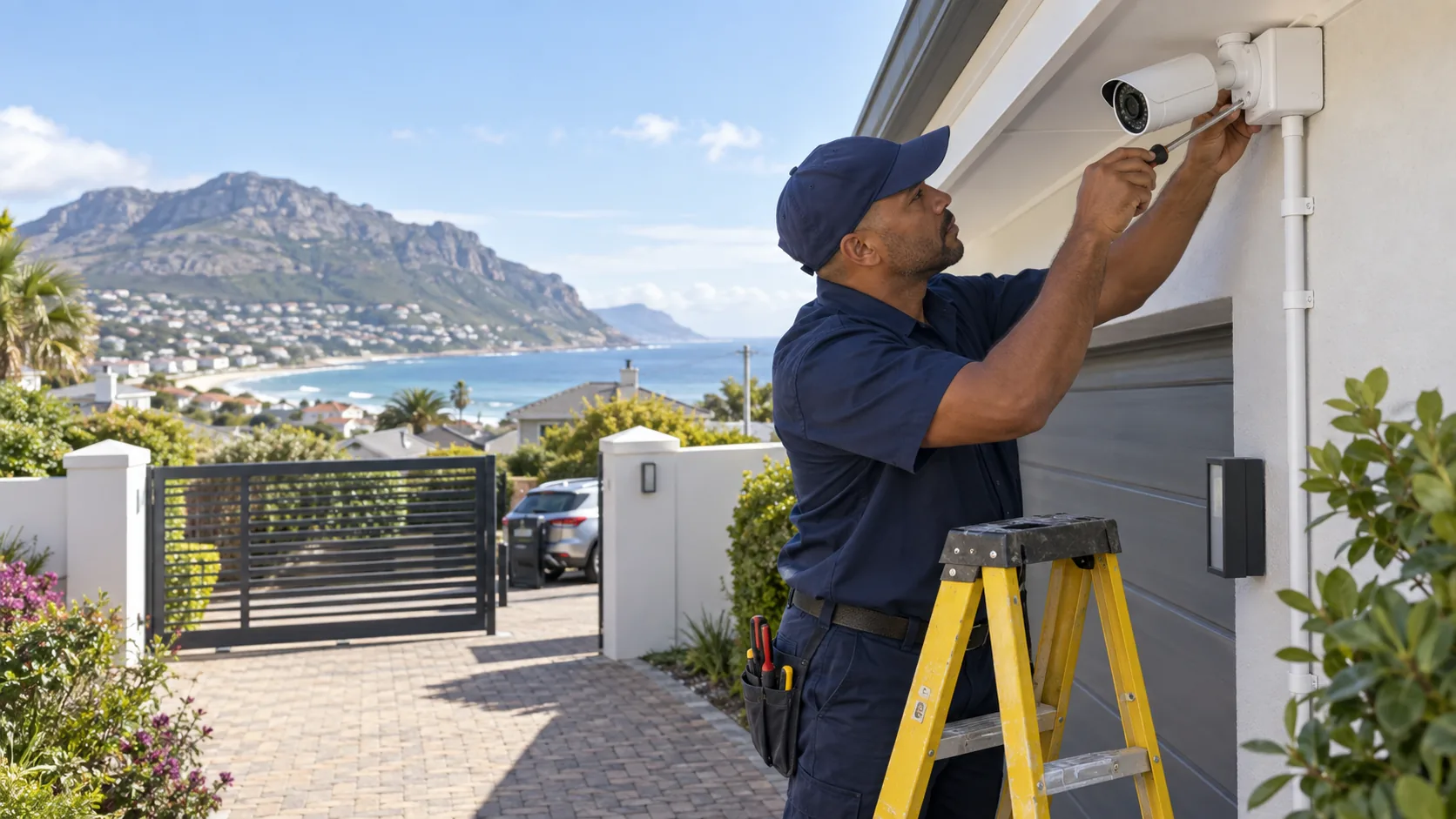
Knowing where to place CCTV cameras around a Fish Hoek home starts with a simple question: which parts of the property would you need to see clearly if something happened? The answer is usually the route a person takes, not every square metre of the garden. Entrances, the driveway, side passages and the route to the back door deserve attention first.
Where to place CCTV cameras around the main routes into your Fish Hoek home
Walk around the property as if you have never visited it. Start at the pavement and follow the obvious routes to the front door, garage, side gate and back entrance. Notice where a wall, hedge, carport or outside room blocks your view. These are more useful clues than choosing positions because they look neat from below.
Sketch the house and mark the main approach routes. Then mark the point at which you would want a recognisable view of a face, vehicle or parcel. A very wide overview may show movement yet miss the detail that made the recording worth keeping. Your choice of lens and mounting height should suit that job.
Cover the front door and pedestrian gate first
The front entrance is often the best starting point because residents, guests and deliveries all pass through it. Aim for a view that captures a person's face as they approach, rather than only the top of a head. Mounting a camera extremely high can protect it from casual interference, but the steep angle may make identification harder.
If the pedestrian gate is some distance from the door, one camera may not cover both positions well. A gate camera can record the first approach, while a second view near the entrance covers the final few metres. Keep bright sky out of most of the frame where possible. Strong backlight behind a visitor can turn a face into a dark shape.
Plan the driveway and garage view around real movement
A driveway camera should cover vehicles entering and leaving, as well as people walking towards the house. Test the view with a car parked in its usual place. A position that looks perfect over an empty driveway may become useless once a bakkie or SUV blocks half the frame.
For garages, decide whether you need an outside approach view, an inside view, or both. An outdoor camera watching the door cannot see what happens behind it once it closes. An indoor garage camera needs enough light and a suitable angle to cover the internal door, stored equipment and the vehicle area without staring through a window.
Check side passages, back doors and hidden corners
Narrow side passages often link the front of a property to a back door or courtyard. A camera looking along the passage usually gives a more useful view than one pointed across it. Place it so drainpipes, eaves and open gates do not fill the foreground or reflect infrared light at night.
For the back of the home, focus on doors, opening windows and routes from boundary gates. Do not try to solve every blind spot by fitting more cameras. Sometimes trimming a hedge, moving a stored item or adjusting an outside light creates a cleaner view. If you are planning security alongside connectivity and entertainment, the home TV, WiFi and security planning guide can help you coordinate the work.
Choose useful home CCTV camera positions
A practical first-pass plan usually considers:
- the front door and pedestrian gate;
- the driveway, garage door and parked vehicles;
- side gates and passages leading behind the house;
- the back door, courtyard and accessible rear windows;
- outbuildings or storage areas that sit away from the main home;
- the recorder location, cable routes and available power.
These are priorities, not a shopping list. The right number of cameras depends on the property's shape and the detail required in each view. A professional CCTV assessment and installation can match camera type, lens, recording and cable routes to the actual site.
Account for False Bay light, salt and wind
Fish Hoek homes can receive sharp morning or late-afternoon light depending on their orientation. Reflections from pale walls, windows and wet paving may also affect the picture. Around False Bay, coastal salt and wind matter when choosing exposed positions. Sheltered mounting under an eave may reduce direct weather exposure, provided the eave does not block the view or bounce infrared light back into the lens.
Check outdoor CCTV cameras after windy weather and keep lenses clean. A fine salt film or wind-blown dust can soften an otherwise good image, especially at night. Branches, hanging plants and washing lines should stay outside the immediate field of view because their movement can obscure activity and trigger repeated motion alerts.
Plan cables, WiFi and nearby equipment together
A camera needs a reliable path back to its recorder or network. Thick walls, long distances and outdoor structures can make a promising wireless position less dependable than expected. If cameras will use the home network, arrange a WiFi and network check before assuming every corner has stable coverage.
Cable routes should be protected, tidy and serviceable. Planning them before redecorating or mounting screens can prevent awkward surface runs later. If the camera project overlaps with a lounge or bedroom update, coordinate it with any TV mounting work so power, data and wall access are handled in a sensible order.
Privacy and indoor camera boundaries
CCTV privacy at home begins with limiting each view to a genuine household purpose. Avoid pointing cameras into a neighbour's windows, private garden or other spaces where people reasonably expect privacy. Use privacy masking if the equipment supports it, and tell household members and regular workers where cameras operate.
POPIA may be relevant when identifiable people are recorded and personal information is handled. Practical steps include collecting only what you need, controlling access to footage, using secure passwords and avoiding unnecessary sharing. The circumstances can differ from one property to another, so this is practical guidance rather than legal advice.
Frequently asked questions
How high should a home CCTV camera be mounted?
It should be high enough to reduce easy interference but low enough to capture useful facial detail. There is no single height that suits every entrance. Test the angle at the real walking distance and check that caps, eaves or bright sky do not hide a person's face.
Can my camera include the pavement or a neighbour's property?
A small part of a public approach may be unavoidable when covering your gate, but the view should not collect more than the security purpose requires. Reframe the camera or apply privacy masking where possible. Avoid neighbour windows and private living areas, and seek legal advice if your situation is uncertain.
Where is the best night vision camera placement?
Night vision camera placement works best where the lens is clear of nearby walls, gutters, leaves and spider webs that can reflect infrared light. Avoid aiming through glass. Check the recording after dark with outside lights both on and off, because a daytime view cannot reveal every night-time problem.
Should cameras point at doors or cover the whole garden?
Start with doors, gates and the paths people use to reach them. A broad garden view can provide context, but it may not capture enough detail for identification. Use overview coverage only after the main entry and movement points have clear, usable views.
Turn the sketch into a workable plan
Review every proposed position in daylight and darkness, then check what changes when gates open, cars park and outside lights switch on. That short test catches many common mistakes before installation begins. It also makes it easier to decide where a focused entrance view matters more than another wide shot.
If you want help assessing angles, network needs and cable routes around your Fish Hoek property, get in touch to arrange a site discussion. Bring your rough sketch and the areas that concern you. It is a useful starting point for a system that covers the right places without watching more than it needs to.