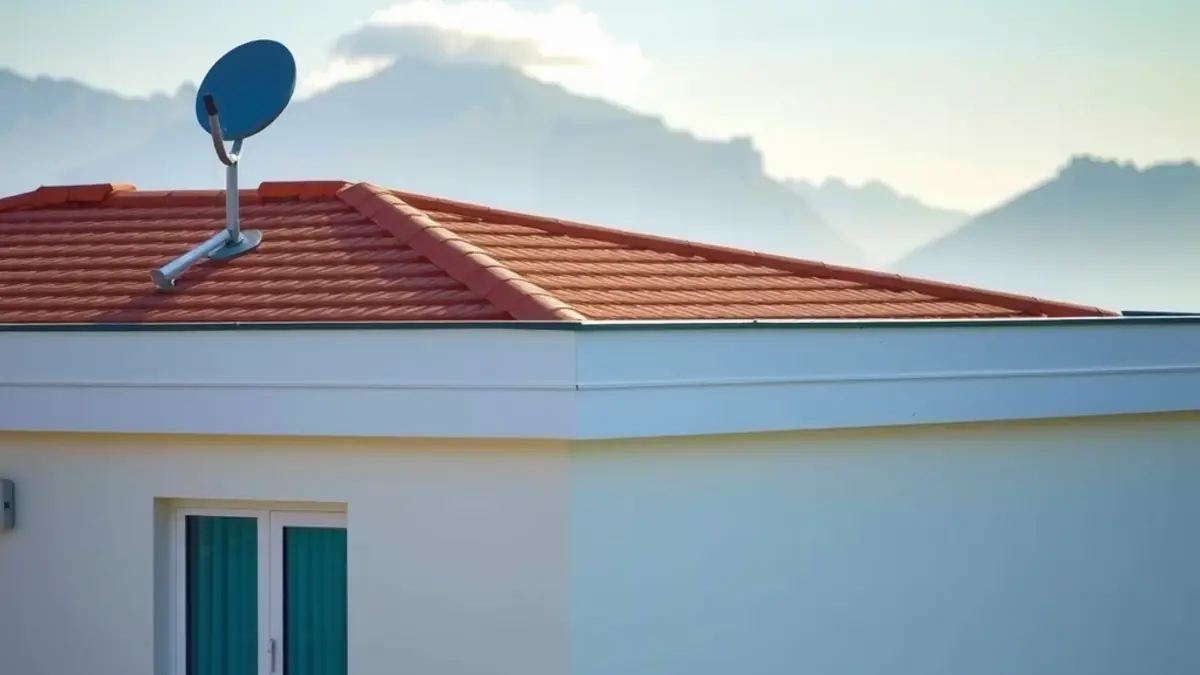
DStv installation in a flat is rarely just a private decision between an owner and an installer. Roofs, exterior walls, risers and shared dishes are often common property. A change made for one unit can affect the appearance, waterproofing or television service of the whole building. Fish Hoek body corporates therefore benefit from a documented process for approvals, fault reporting and upgrades.
This guide is for trustees, managing agents, owners and tenants in Fish Hoek, Kalk Bay, Muizenberg, Glencairn and the Far South. It explains how to plan a reliable shared system without encouraging unauthorised work. Scheme rules and professional advice should always be checked for the specific property.
Understand who owns each part of the system
A communal installation usually has shared equipment that receives and distributes signal, plus cabling or outlets serving individual units. Responsibility can change at a defined handover point. Before booking work, identify whether the problem affects one unit, one floor or the whole building. Ask the managing agent for drawings, previous invoices or equipment records if they exist.
A specialist in communal satellite and TV systems can test the distribution path systematically. This is preferable to allowing several residents to adjust a shared dish or amplifier independently. A body corporate should also define who can authorise access to roofs, locked cabinets and service risers.
Get approval before installing or changing equipment
A resident requesting a new DStv installation should first establish whether the building provides a compatible connection. Adding a private dish to common property may breach conduct rules and create waterproofing or visual problems. Written approval protects both the resident and the scheme.
The request should show the proposed equipment position, cable route, wall penetrations and installer access. In older brick buildings, drilling and sealing require care. Near False Bay, exterior fittings also need protection against salt exposure. Trustees can use a standard application form so that every resident follows the same process.
Diagnose shared faults before replacing private equipment
If several units lose channels at the same time, the likely cause may sit in shared infrastructure. Ask affected residents for the time, error message and channels involved. A structured DStv repair assessment should check the common source and distribution before residents are told to replace decoders.
Strong south-easterly wind can expose movement in a poorly secured common dish. Professional dish alignment should include signal measurements and a mount inspection. Simply turning the dish until a picture appears may leave inadequate margin for bad weather and can interrupt every connected unit.
Plan for decoder compatibility and multi-room viewing
Residents may use different decoder generations, and shared infrastructure must support the intended services. An Explora installation in a flat should be checked against the building distribution design. The installer needs to know what signal format and connections reach the unit.
Within a larger apartment, XtraView installation may be possible, but the extra viewing point still needs suitable cabling and equipment. The body corporate should distinguish between work contained inside a unit and work that touches common risers, walls or distribution hardware.
Manage moves, tenants and handovers
A tenant moving in should receive clear information about available outlets and approval rules. A DStv relocation from another address does not mean the old dish should automatically be fitted to the building. The decoder and selected equipment may be reusable, while the flat connects through the established communal system.
When a tenant leaves, record what belongs to the resident and what belongs to the scheme. Photograph outlets and equipment where useful. This reduces later disputes and prevents shared components from being removed accidentally.
TV mounting and internal alterations
Even work inside a unit deserves planning. TV wall mounting should use fixings suited to the wall, avoid concealed services and consider noise transfer through shared walls. Cable trunking and furniture placement should not block access to distribution outlets.
Scheme rules may regulate drilling times and contractor access. Managing agents can reduce complaints by publishing working hours, lift protection requirements and sign-in procedures in advance.
Free-to-air television options
Some buildings want a shared or individual free-to-air option. Openview installation requires compatible satellite equipment and should be assessed against the existing distribution network. It cannot be assumed that every communal DStv system will support every alternative configuration without changes.
A TV aerial system may distribute terrestrial channels where reception is suitable. Shared aerial work should include signal testing, amplification decisions and an organised distribution plan. Too much amplification can be as problematic as too little, so parts should not be added by guesswork.
WiFi planning for units and common areas
Residents usually manage their own internet service, but thick walls and dense networks can produce poor coverage and interference. A WiFi network assessment can improve coverage inside a unit through better placement, mesh planning or wired access points.
Common-area WiFi for offices, gates or visitor spaces should be separated and secured appropriately. The body corporate needs clear responsibility for subscriptions, equipment, passwords and support. Television distribution and WiFi may share routes or cupboards, but they should remain clearly labelled and professionally organised.
CCTV and privacy in sectional-title schemes
A building-wide CCTV installation needs more than camera brackets. Trustees should define legitimate coverage areas, retention, access to recordings, signage, cybersecurity and a process for requests. Cameras should avoid unnecessary intrusion into private spaces.
Coastal conditions matter for exterior devices and junction boxes. Power continuity, recorder location and network capacity should be planned as part of the same design. The body corporate should obtain the necessary legal or specialist advice on privacy and governance rather than leaving policy decisions to the installer.
Commercial spaces within a mixed-use building
Restaurants, shops or offices may have different television needs from residents. A commercial DStv installation should be scoped separately, including display count, equipment security, operating hours and cable routes through common areas. The business must confirm suitable subscriptions and permissions with the relevant provider.
A practical body corporate maintenance plan
- Keep an equipment register, system diagram and authorised contractor list.
- Label shared cabinets, feeds and unit connections clearly.
- Record signal readings and parts replaced during service visits.
- Inspect exposed brackets, seals and cables periodically.
- Set a written process for residents to report faults and request upgrades.
- Back up configuration details and secure access to networked equipment.
Good records reduce call-out time and prevent repeated trial-and-error changes. They also help trustees budget for maintenance rather than waiting for a building-wide outage.
Frequently asked questions
Can an owner install a private satellite dish on a flat?
Not without checking the scheme’s rules and obtaining required approval. Roofs and exterior walls are commonly shared property, and the building may already have a communal connection.
Who should report a shared DStv fault?
Follow the body corporate or managing agent’s process. One coordinated report listing affected units and symptoms is usually more useful than several unrelated call-outs.
Can a communal system support Explora?
Many can, but compatibility depends on the distribution design and equipment. The installer should test what reaches the unit before confirming the setup.
Who pays for repairs inside a unit?
Responsibility depends on scheme rules, ownership and the fault location. Establish the handover point between common infrastructure and private equipment before authorising work.
Should a body corporate allow multiple installers to access the roof?
Controlled access through authorised, accountable providers is usually safer. It protects waterproofing, reduces accidental changes and keeps maintenance records consistent.