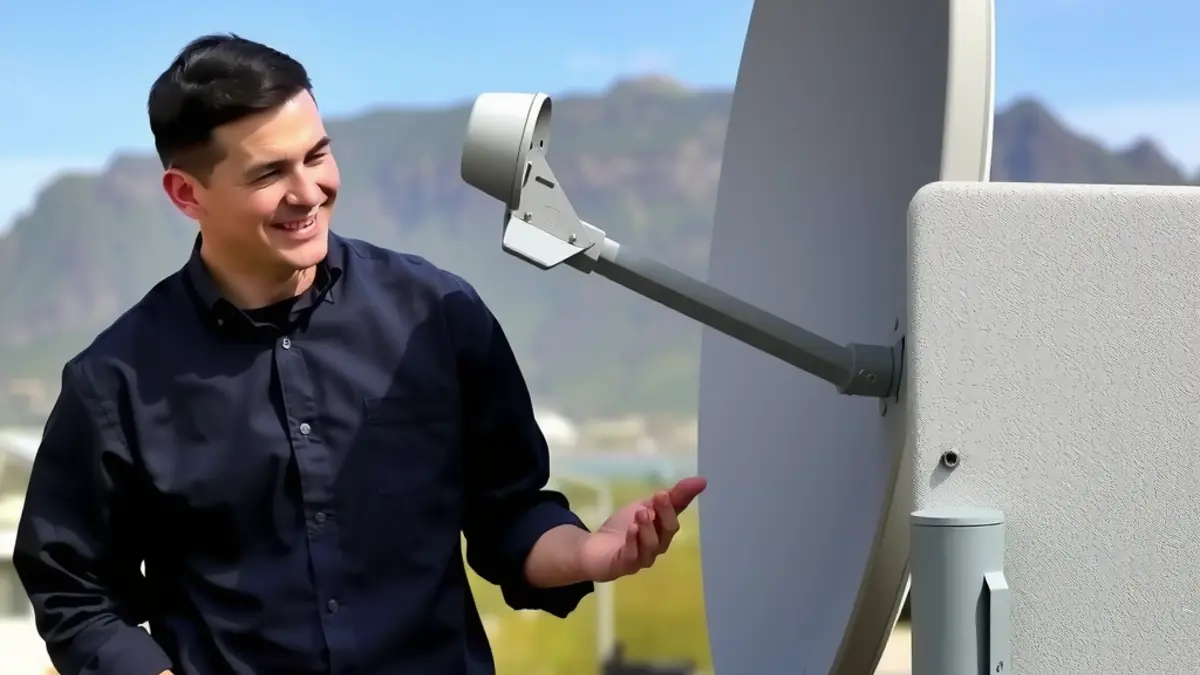
Choosing a DStv installer in Fish Hoek should involve more than finding the first available number. A reliable installation needs a clear satellite line of sight, secure hardware, protected connections and tidy cable routes. Local conditions add another layer: salt mist from False Bay can attack exposed fittings, the south-easter can test a weak bracket, and the mountain can limit suitable dish positions on some properties.
The right installer will ask useful questions before suggesting a solution. They should also be able to explain what they found, what they plan to change and how they will confirm that the system works. Use the checks below to compare providers on workmanship and process rather than price alone.
Start with the exact service you need
Describe the outcome, not just the symptom. If you have moved into a property with no usable system, request a survey for a new DStv installation. If the picture started breaking up after wind or rain, ask for diagnostic DStv repairs. If the dish has visibly shifted or signal quality is marginal, the correct starting point may be measured dish alignment.
This distinction matters because a technician should arrive prepared. A repair visit requires test equipment and a fault-finding process. A new installation requires planning for mounts, cable, access and decoder configuration. Be cautious if every enquiry receives the same answer before anyone has considered the property.
Look for site-specific questions
A thoughtful installer will ask about the roof type, storeys, existing dish, decoder model and intended television positions. In Fish Hoek, they may also ask which side of the valley the home occupies and whether nearby trees or buildings restrict the view. Older brick homes often need careful drilling and cable routing, while exposed properties in Glencairn or near the coast may need extra attention to weather protection.
For a recording setup, ask about experience with Explora installation. For two viewing environments, discuss equipment compatibility and layout before booking XtraView installation. A competent installer should not promise that an arbitrary combination of old and new decoders will work without checking the details.
Ask how diagnosis and testing are done
Signal strength alone does not tell the whole story. The installer should check signal quality, cable condition, connectors, power and decoder behaviour. Intermittent faults can result from moisture, corrosion, movement or a damaged cable. Replacing one component without testing the system can waste money and leave the true cause in place.
At completion, channels should be checked, the decoder should start normally and the customer should understand the basic setup. If equipment is being moved, a proper DStv relocation should include safe removal, an assessment of reusable parts and full testing at the new position or address.
Review the quotation and scope
A useful quote identifies labour, main equipment and any assumptions. It should state whether cable, connectors, brackets and activation assistance are included. Ask what could cause the price to change, particularly if roof access has not yet been inspected. Vague totals make comparison difficult and can create disputes later.
Related work should be listed separately. If you want a screen fitted, professional TV mounting should account for screen size, wall type, bracket choice, viewing height and cable management. Mounting into older brick, above a fireplace or onto a surface with hidden services requires particular care.
Check whether the installer understands more than satellite TV
Many households combine satellite viewing with streaming and free-to-air options. An installer offering Openview installation should understand that it is a distinct platform with its own equipment and setup. Similarly, TV aerial installation requires an assessment of local terrestrial reception, a suitable aerial and safe cabling.
Connected television depends on stable network coverage. If streaming buffers in rooms away from the router, a WiFi network service should begin with the layout, wall materials and device demand. Thick masonry can reduce coverage sharply. A good provider will not automatically prescribe a cheap repeater without considering wired access points, mesh placement and backhaul.
Where camera coverage is required, ask whether CCTV installation is planned around useful views, night conditions, recording, storage and secure remote access. Outdoor cameras and junctions near False Bay need suitable protection. An integrated installer should coordinate cable routes without mixing systems carelessly.
Use the right specialist for shared and business properties
Flats and sectional-title schemes involve common property and shared infrastructure. Before approving work, establish whether the unit connects to a common dish. A provider experienced with communal satellite systems should test the distribution path and work with body corporate approval rather than making unauthorised changes.
Business requirements differ from domestic viewing. Commercial DStv services may involve multiple displays, protected equipment, scheduled work and coordination with network or electrical contractors. Restaurants, offices and guest accommodation should also confirm subscription and content permissions directly with the appropriate provider.
Warning signs to take seriously
- A fixed price is offered without asking about access, equipment or cable distance.
- The proposed solution is to replace several parts before tests are done.
- No explanation is given for the selected dish position.
- Cables will be left loose, sharply bent or exposed at joins.
- The installer cannot describe how the signal will be tested.
- Shared building equipment will be altered without written permission.
- A request for a receipt, scope or workmanship terms is dismissed.
A practical hiring checklist
Before the appointment, send photos and a precise list of rooms and equipment. Confirm the visit window, call-out terms and expected scope. On site, ask the installer to point out the proposed dish position and cable route. After the work, inspect visible cabling, check every connected screen and keep the written job details.
A trustworthy professional does not need to overwhelm a customer with technical language. Clear explanations, careful work and measured testing are stronger signs than dramatic promises. The result should suit the property now and leave sensible options for future upgrades.
Also ask how the installer handles unexpected findings. A sound process pauses the job, shows the customer the issue and agrees any extra work before proceeding. This is particularly important when old cable disappears into a ceiling or a corroded bracket only becomes visible during removal. Transparent decisions protect the budget and make the completed installation easier to maintain.
Frequently asked questions
Should a DStv installer provide a written quote?
For anything beyond a minor call-out, a written scope is valuable. It should identify major materials, labour, assumptions and optional work so that quotes can be compared fairly.
How can I tell whether an installer understands Fish Hoek conditions?
Ask how they will handle coastal corrosion, strong wind exposure, restricted line of sight and cable routes through older brickwork. The answer should relate to your site rather than repeat generic claims.
Do I need permission to install a dish at a flat?
Often, yes. Exterior walls, roofs and shared systems may be common property. Check conduct rules and obtain body corporate or landlord approval before installation.
Can the same installer set up DStv and WiFi?
Some can, but ask how each system will be tested. Satellite signal quality and internet coverage are separate, and competence in one does not automatically prove competence in the other.
What should I check before the installer leaves?
Test all connected televisions, basic decoder functions and any network features included in the job. Inspect visible cables and fittings, ask what was replaced and retain the quote or invoice.